

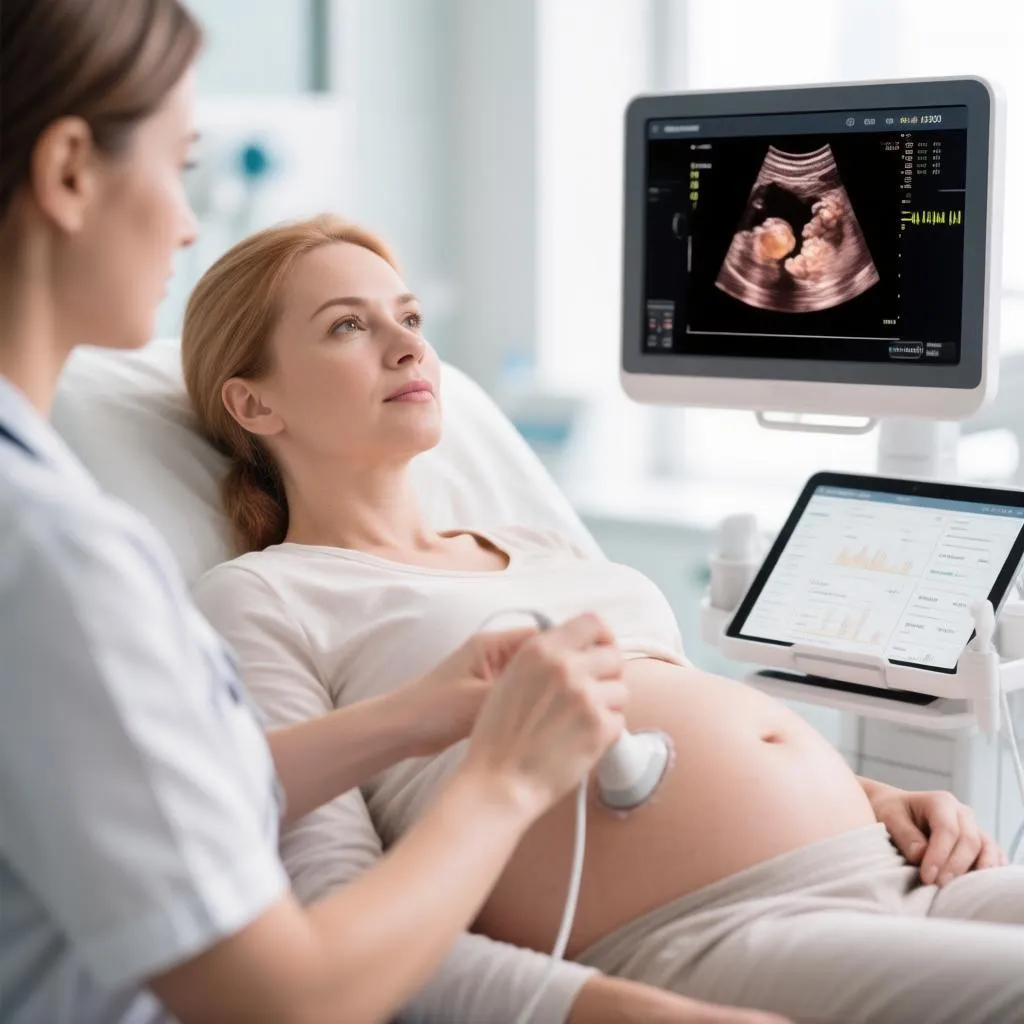
Few decisions in the birth room carry as much emotional weight as the one about pain relief — and few decisions are surrounded by as much mythology. Some women arrive at the hospital with a birth plan that forbids the epidural on principle; others announce it from the parking lot. Meanwhile, the practical picture is more nuanced than either camp usually admits: the epidural is the most effective pain relief available in modern obstetrics, it is also the option with the most significant side-effect profile, and it sits alongside a whole ladder of lighter options — nitrous oxide, IV medications, water immersion, movement and breathing techniques — that work differently, cost nothing in side effects, and reduce pain by varying fractions rather than by the near-total block an epidural provides. The honest framing is not “epidural or not” but “which tool for which moment, and how do they combine.” That framing matters for a concrete reason: most labors are long enough that preferences written at midnight in a birth plan get tested at hour nine of active labor, and the women who cope best are usually the ones who understood their options before the contractions started — so that their decisions in the moment are choices, not improvisations.
First, understanding labor pain itself
Everything about pain relief choices makes more sense once the pain itself is understood — because labor pain is not one pain but several, arriving in phases with different characters.
The phases feel distinct:
| Phase of labor | What the pain feels like | What typically helps most |
|---|---|---|
| Early labor | Menstrual-cramp-like waves, intermittent, manageable | Movement, breathing, shower, distraction, rest |
| Active labor | Intense, rhythmic, requiring full attention; back pressure common | Nitrous oxide, IV medication, water, massage — or epidural |
| Transition | The most intense, frequent contractions before pushing | Epidural if not already placed; intensive coaching and support otherwise |
| Pushing and birth | Pressure, stretching, often a different quality than before | Perceived often as more manageable — the body’s own effort reframes it |
Three properties of this pain explain why no single option is universally right. It is intermittent: between contractions, there are gaps of relief that techniques exploit. It has a purpose and an endpoint: unlike chronic pain, it stops, and its intensity tracks progress. And it is uniquely influenced by support and fear: the same contractions hurt more in a cold, impersonal room with strangers than in a familiar one with a trusted person present. This last point is not sentiment — anxiety measurably amplifies pain perception, which is why the non-drug tools below are not decorative but physiological.
The epidural: what it is, what it does, what it costs
The epidural is a regional anesthetic: a thin catheter placed in the lower back delivers local anesthetic and often a small amount of opioid medication into the epidural space around the spinal nerves, blocking pain signals from the lower body while usually preserving enough sensation to push. Modern “walking” or low-dose epidurals are engineered to keep more movement and sensation than the heavy blocks of decades past, but the core mechanics are unchanged.
The benefits are real and measurable:
- Near-complete pain relief. Nothing else in the pharmacological toolkit approaches it — most women describe the contractions going from overwhelming to pressure or nothing at all. For labors that are long, exhausting or medically complicated, this is a decisive advantage.
- Staying power and adjustability. The catheter stays in place; the dose can be topped up or increased for the pushing stage, and converted to stronger anesthesia for an emergency cesarean without a new procedure.
- Physiological rest. By relieving pain, an epidural lets a exhausted laboring woman sleep or conserve energy — which matters enormously in long labors and can, in some scenarios, help labor progress rather than hinder it.
The trade-offs deserve equally honest listing:
- Mobility is lost or reduced. Once the epidural is effective, you are largely confined to the bed — movement and position changes become the staff’s job rather than yours.
- Second-stage dynamics. A strong block can make pushing less instinctive, sometimes lengthening the pushing phase and modestly increasing the likelihood of instrumental delivery (forceps or vacuum). Low-dose protocols have reduced this risk but not eliminated it.
- Common side effects. A drop in blood pressure (monitored and treated routinely), shivering, itching from the opioid component, difficulty urinating (catheterization is common).
- Rare but real risks. A severe headache from a dural puncture occurs in a small percentage of cases and can require additional treatment; serious neurological complications are vanishingly rare but exist.
- Timing constraints. The epidural requires an anesthesiologist and IV placement — it is not available instantly on demand in every unit, and in some situations it cannot be placed at all.
One myth deserves direct retirement: the fear that epidurals cause lasting back pain is not supported by evidence — postpartum back pain occurs at similar rates with and without epidurals, since the cause is usually the labor itself, not the needle. Another: epidurals do not meaningfully harm the baby, with medication reaching the infant in far smaller quantities than IV opioids.
The lighter options: what each one actually delivers
Between “nothing” and “epidural” sits a whole toolbox, and understanding what each tool genuinely achieves prevents the most common disappointment: expecting from a light option what only an epidural can give.
The main alternatives, in rough order of effectiveness:
| Option | How it works | Pain reduction | Best suited for |
|---|---|---|---|
| Nitrous oxide (gas and air) | Inhaled mixture that alters pain perception without eliminating it | Moderate — takes the edge off, does not remove pain | Early and active labor; women wanting to stay mobile and in control |
| IV opioids (fentanyl, others) | Systemic medication that dampens pain centrally | Moderate; can cause drowsiness | Women who cannot or do not want an epidural but need more than gas |
| Water immersion (pool or tub) | Buoyancy, warmth and hydrostatic pressure | Moderate, especially in early labor | Early and active labor at home or in units offering birth pools |
| TENS machine | Low electrical pulses on the back that compete with pain signals | Modest, most effective in very early labor | Home labor, early phase, minimal intervention preference |
| Breathing, movement, massage, hypnobirthing | Nervous-system regulation, position optimization, gate-control effects on pain signals | Variable; can be substantial in early labor | Throughout, as the foundation all other options sit on |
Nitrous oxide deserves a closer look, because it is the option women most often misunderstand. It works within seconds of inhaling and leaves the body equally fast — which means it does not accumulate, does not require an anesthesiologist, and leaves you free to move. It also means it is only working while you breathe it, in sync with contractions, and it does not eliminate pain — it blurs it. Women who love it describe feeling calmer and slightly detached from the sensation; women who expect anesthetic-level relief feel cheated. IV opioids have a parallel profile: real relief for an hour or two, at the cost of drowsiness and nausea, with the caveat that if delivery happens while the medication is at peak effect, the baby may be born sleepy — which is why providers are careful with timing late in labor.
The non-drug tools — movement, water, breathing, massage, supported positions — are not competing with medication; they are the baseline that makes every medication work better. The same epidural placed on a woman who has slept, moved and eaten appropriate amounts performs differently from one placed on an exhausted, dehydrated, frightened patient. The tools cost nothing, have no side effects on the baby, and remain available in every scenario — including the ones where the epidural cannot be placed.
Combining options: how real labors actually work
The most practical insight from experienced providers is that the choice is rarely binary in practice. The most common real-world trajectory looks like this: early labor managed with movement, shower and breathing; active labor managed with nitrous oxide and position changes; and at some point — different for every woman — a decision point where the lighter tools have reached their ceiling. At that point, the epidural is not a failure of the plan; it is the plan’s next gear. Women who approach it this way, having genuinely used the earlier options rather than white-knuckling through them, consistently report higher satisfaction with their overall birth experience than women at either extreme — those who refused all pain relief out of principle and endured hours of avoidable suffering, and those who asked for the epidural in early labor and then found themselves confined to bed for the long haul.
This framing also dissolves the false moralizing that surrounds the topic: there is no prize for declining medication, and no shame in choosing it. The only outcome-relevant questions are clinical — how long is labor likely to be, how does the patient tolerate pain under exhaustion, are there medical factors that favor or disfavor regional anesthesia — and they are answered case by case, not by philosophy.
Building a birth plan that survives contact with labor
The practical value of all this information concentrates into a plan with the right architecture:
- Decide what you want for early labor. This is the phase you will spend the most time in, and the light tools — movement, water, breathing, a supportive person — are at their peak effectiveness here. A plan that only addresses the epidural question has skipped most of the labor.
- Identify your personal decision point. Ask yourself, in advance, what would make you choose the epidural: hours of vomiting from pain, exhaustion, a specific number of centimeters. Knowing your own threshold prevents the decision from being made by momentum or panic.
- Discuss the epidural’s logistics with your unit. Anesthesia availability, whether it is on demand around the clock, the unit’s typical protocol — these practical facts shape what is actually available at 3 a.m.
- Write the plan with flexibility as its spine. “I want to try the light options first and will ask for the epidural if I reach my limit” is a plan that works in both directions; “no epidural ever” and “epidural immediately” are the two plans most likely to generate distress when labor behaves unexpectedly.
- Tell your birth partner your preferences out loud. In the moment of active labor, the laboring woman’s ability to advocate dissolves; the partner who knows her wishes, and the boundaries around them, is the one who executes the plan.
The plan that survives labor is not the one with the most rules — it is the one that named the preferences, the thresholds and the fallbacks, so that every decision in the moment has already been rehearsed.
Conclusion
Pain relief in labor is a spectrum, not a fork in the road: movement, water and breathing at one end, nitrous oxide and IV opioids in the middle, the epidural at the effective extreme — with each tool reducing pain by different fractions, on different timelines, with different trade-offs. The epidural remains the only option that removes labor pain almost entirely, and its costs — immobility, side effects, the small increase in assisted delivery — are real but bounded and well understood. The lighter options are less effective individually but remain available in every scenario and make everything else work better.
The women who report the most satisfying birth experiences, across all modes of delivery, tend to share one thing: they made informed decisions in sequence, rather than defending a single ideology for a process that unfolded unpredictably. Understanding what each option delivers — and what it does not — converts the birth plan from a statement of philosophy into a working strategy. And a working strategy, in the birth room as everywhere else, is what turns an overwhelming experience into a managed one, whatever shape the labor ultimately takes.