

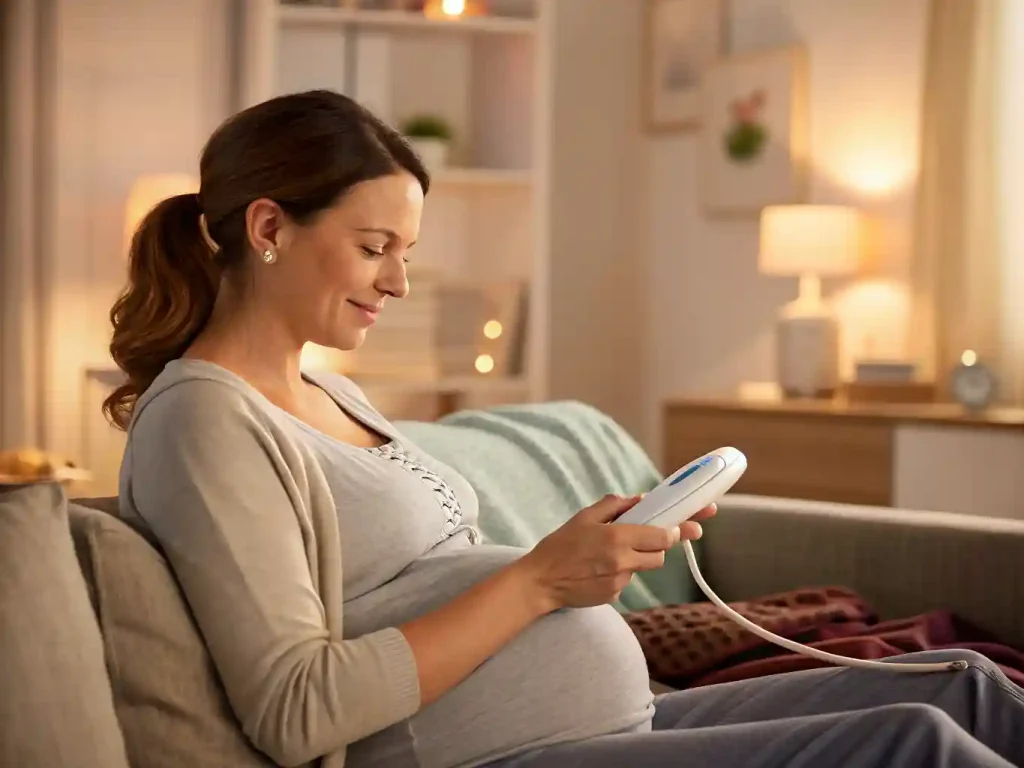
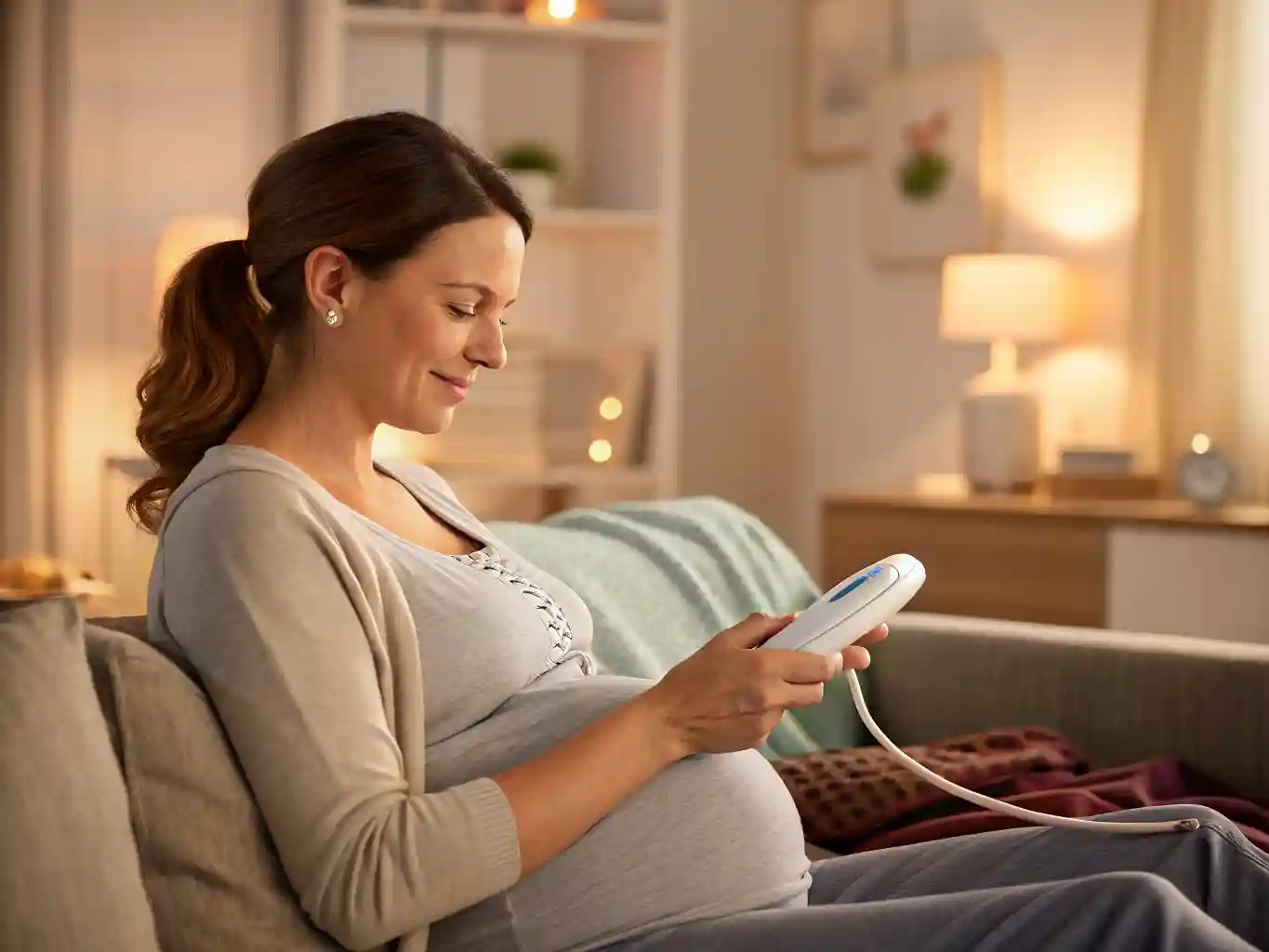
Pregnancy has always been a period of waiting, listening, noticing, and wondering whether everything is developing as it should. For generations, the main answers came during scheduled visits: a midwife placing a Doppler probe on the abdomen, an ultrasound image appearing on a screen, a doctor measuring blood pressure, or a nurse asking about movements, symptoms, and general well-being. Between appointments, most parents had little more than their own sensations and intuition.
That gap between clinic visits is now changing. More pregnant women are using medical devices at home, from blood pressure monitors and glucose meters to wearable sensors, movement trackers, connected apps, and fetal heartbeat devices. Some of these tools are recommended by clinicians for clear medical reasons. Others are bought privately because parents want reassurance, convenience, or a feeling of closer connection with the baby.
The trend is not just about technology. It reflects a deeper shift in maternity care: pregnant women want more information, health systems are under pressure, appointments can be hard to access, and many families are used to managing health through digital tools. Home monitoring can be helpful when it supports professional care. It can also become risky when a device creates false reassurance, anxiety, or confusion. The real question is not whether home devices are good or bad, but how they are used, who interprets the information, and when clinical help is needed.
Why home monitoring is becoming part of modern pregnancy care
The rise of home fetal and pregnancy monitoring did not happen suddenly. It grew from several changes happening at the same time. Many people now track sleep, heart rate, activity, temperature, menstrual cycles, and nutrition through wearable devices or phone apps. Pregnancy naturally became part of that wider habit of self-tracking. When a person is already used to checking health data daily, waiting several weeks between prenatal appointments can feel strangely passive.
Convenience is another strong reason. Pregnancy appointments are not always easy to arrange around work, childcare, travel, fatigue, or mobility problems. For someone living far from a hospital or clinic, a simple home measurement can save time and reduce stress. Blood pressure checks at home, for example, can be especially useful for people who need closer observation but do not necessarily need to attend hospital every time.
There is also an emotional reason. Pregnancy brings joy, but it can also bring uncertainty. After previous loss, fertility treatment, complications, or a difficult diagnosis, the desire for reassurance can be intense. A device that appears to offer immediate information may feel comforting. Hearing a heartbeat or seeing a number on a screen can give the impression that everything is under control, at least for a moment.
Healthcare systems have also become more open to remote care. During and after the pandemic period, many maternity services expanded phone consultations, digital check-ins, remote blood pressure reporting, and hybrid care models. This made home monitoring feel less unusual. In some cases, the device is not an optional gadget but part of a structured medical plan, with clear instructions on what to measure, when to report, and what symptoms require urgent assessment.
The strongest form of home monitoring is not isolated self-checking. It is shared care. A pregnant person measures something at home, but the result is interpreted within a professional pathway. That difference matters. A blood pressure reading, glucose level, or fetal signal is not meaningful in isolation. It becomes useful when connected to symptoms, gestational age, medical history, and clinical judgment.
What devices pregnant women are using at home
Home pregnancy monitoring covers a wide range of tools, and they should not all be treated the same way. Some are well established and commonly recommended. Others are still developing. A few are marketed in ways that can make them seem more reliable than they really are for everyday users.
Blood pressure monitors are among the most practical home devices in pregnancy. They are often used when there is concern about hypertension, pre-eclampsia risk, or previous high blood pressure. A validated cuff, correct technique, and clear reporting instructions can make home blood pressure monitoring a valuable part of maternity care.
Glucose meters and continuous glucose monitors are also important for people with gestational diabetes or pre-existing diabetes. They help show how food, activity, medication, and time of day affect blood sugar. Unlike casual tracking, glucose monitoring usually comes with a specific plan from a clinician, including target ranges and actions to take when readings are outside the expected level.
Fetal heartbeat devices are more complicated. Handheld Doppler devices can detect sound related to fetal heart activity, but they require skill to use and interpret. The presence of a sound does not prove that the baby is well, and the absence of a sound does not always mean something is wrong, especially early in pregnancy or when the baby’s position makes detection difficult. A person may accidentally pick up their own heartbeat, placental blood flow, or other sounds and mistake them for the baby’s heartbeat.
Wearable fetal monitors and remote cardiotocography-style systems are another developing area. Some are designed for clinical programs, especially for high-risk pregnancies, and transmit data to healthcare teams. These systems are different from consumer gadgets because they are used with medical oversight. Their value depends on device accuracy, correct placement, data quality, timely review, and clear escalation pathways.
Movement awareness remains one of the simplest and most important forms of home observation. It does not require a device, but it does require attention to the baby’s normal pattern. A change in movement, a noticeable reduction, or no movement should not be managed by trying to get reassurance from a home heartbeat monitor. It should lead to contact with maternity services.
The range of devices can feel confusing, especially because marketing language often blurs the line between wellness, bonding, and medical monitoring. A clear comparison helps separate tools that are commonly used in structured care from those that require more caution.
| Device or method | Common purpose | Possible benefit | Main limitation |
|---|---|---|---|
| Blood pressure monitor | Tracking maternal blood pressure at home. | Can support earlier detection of concerning patterns when readings are shared with clinicians. | Needs a validated cuff, correct technique, and medical guidance on thresholds. |
| Glucose meter or continuous glucose monitor | Managing gestational or pre-existing diabetes. | Helps connect daily habits and treatment with blood sugar patterns. | Readings need interpretation within an agreed care plan. |
| Fetal movement awareness | Noticing the baby’s usual pattern of movement. | Simple, free, and directly connected to a pregnant person’s lived experience. | Reduced movement needs clinical assessment, not home reassurance. |
| Handheld fetal Doppler | Listening for heartbeat-like sounds. | May feel emotionally reassuring for some parents. | Can be misused or misinterpreted and may delay urgent care. |
| Wearable remote fetal monitor | Tracking fetal and maternal signals in selected care pathways. | May reduce some clinic visits and support closer monitoring in high-risk cases. | Depends on clinical review, reliable data, and proper patient selection. |
| Pregnancy tracking app | Recording symptoms, appointments, movements, or readings. | Can organize information and support communication with care teams. | App advice may be too general and should not replace medical assessment. |
The safest home monitoring tools are usually those that come with instructions from a healthcare professional. The less training a device requires in its advertising, the more carefully families should ask what the device can actually prove. A pregnancy device should not simply produce a number, sound, or graph. It should help the right decision happen at the right time.
The reassurance problem: when more data does not mean more safety
One reason home fetal monitoring is so attractive is also the reason it can become dangerous: it promises reassurance. Pregnancy creates moments when reassurance feels urgent. A person may wake up and realize the baby has been quieter than usual. They may feel cramps, notice a change in symptoms, or simply become overwhelmed by fear. In that moment, a device can seem like the fastest answer.
The problem is that reassurance is not the same as safety. A heartbeat-like sound does not confirm that the baby is receiving enough oxygen, growing well, or free from distress. Fetal well-being is assessed through a wider clinical picture, which can include movement history, maternal symptoms, gestational age, examination, ultrasound findings, blood pressure, urine testing, and professional fetal heart rate assessment when needed.
False reassurance is the biggest concern with casual home Doppler use. If a pregnant person notices reduced movements and then finds a sound on a device, they may decide not to call maternity services. That delay can matter. Reduced fetal movement is treated seriously because a change in the baby’s usual pattern can sometimes be an early sign that further assessment is needed. Home devices should never be used to overrule that warning sign.
There is also the opposite problem: false alarm. A person may not find the heartbeat because the pregnancy is too early, the baby has moved, the placenta is positioned in a way that affects detection, the device is low quality, or the user is not trained. This can cause panic, unnecessary emergency visits, sleeplessness, and repeated checking. What began as a reassurance tool can become a source of distress.
More data can also lead to compulsive monitoring. Some people start checking once a week, then daily, then several times a day. Each normal check brings brief relief, but the relief fades quickly. The person becomes dependent on the next check. In pregnancy after loss or with health anxiety, this cycle can become especially powerful. Support from a midwife, obstetrician, or mental health professional may be more protective than repeated device use.
A balanced approach does not shame parents for wanting reassurance. That desire is human. The safer message is that worry deserves a proper response. When something feels wrong, the best response is not to search for a sound at home but to contact the maternity team. A good care system should make that message clear and should take concerns seriously, even when everything turns out to be fine.
Where home devices can genuinely help
Home monitoring can be valuable when used for the right reason. It can bring care closer to daily life, reduce unnecessary travel, and make some problems visible earlier. The strongest examples usually involve maternal health measurements rather than casual fetal checking.
Blood pressure monitoring is a clear case. Hypertensive disorders in pregnancy can become serious, and blood pressure can change between appointments. Home readings, taken correctly, can show trends that a clinic visit might miss. For some patients, this can support medication adjustment, closer observation, or timely assessment. It can also help distinguish occasional clinic-related high readings from a pattern that needs attention.
Glucose monitoring is another area where home data directly shapes care. Gestational diabetes management depends on patterns over time. A single clinic measurement cannot show how breakfast, dinner, sleep, activity, or medication affects daily blood sugar. Home testing gives both the patient and the care team practical information. It can make advice more personal and less abstract.
Remote monitoring may also help people with limited access to care. Rural patients, people with transport barriers, those balancing multiple responsibilities, and those who need frequent checks may benefit from carefully designed systems. A home device can reduce the burden of repeated visits while still keeping the care team informed.
Some newer wearable technologies aim to monitor fetal and maternal signals outside hospital settings. These tools are promising, especially for selected high-risk pregnancies, but they are not magic. They require validation, professional interpretation, data security, patient training, and clear rules for what happens when readings are abnormal or unclear. A device that collects information without a responsive care pathway may create more noise than benefit.
The most helpful home monitoring plans tend to share several features:
• The device is recommended or approved by the care team.
• The patient knows exactly when and how to use it.
• The readings are recorded in a consistent way.
• There are clear thresholds for calling a midwife, doctor, or maternity unit.
• The device supports care decisions rather than replacing appointments.
• Symptoms and fetal movement changes remain important, even when readings look normal.
These points may sound simple, but they make the difference between useful monitoring and unsafe self-interpretation. A home device should reduce uncertainty in partnership with clinicians, not move responsibility entirely onto the pregnant person.
How clinics and patients can build safer habits
The future of home pregnancy monitoring depends not only on better devices but also on better communication. Many problems arise because families are not told clearly what a device can and cannot do. If a Doppler is sold as a bonding product, a parent may not realize that it can create misleading reassurance. If an app gives generic advice, a user may not know when their own situation requires urgent care.
Clinicians can help by having open conversations instead of simply warning against devices. Many pregnant women will use technology whether or not they mention it during appointments. A non-judgmental question such as “Are you using any devices or apps at home?” can open the door to safer guidance. From there, the discussion can focus on practical boundaries.
Patients also need permission to trust their own observations. If the baby’s movements change, if there is bleeding, severe pain, headache, visual disturbance, swelling, fluid leakage, fever, or a strong feeling that something is wrong, the response should be clinical contact. A normal-looking app screen or a sound from a home device should not cancel that decision.
Device makers have responsibilities too. Marketing should not exaggerate what home fetal tools can prove. Instructions should be clear about limitations. Apps and devices should guide users toward care when symptoms are concerning, rather than encouraging repeated self-checking. Privacy should also be taken seriously, because pregnancy data can include sensitive health information, location patterns, emotional notes, and medical measurements.
A safer culture of home monitoring would make a clear distinction between wellness tools and medical tools. A pregnancy journal app, a contraction timer, or a symptom diary may be useful for organization. A device that claims to assess fetal well-being belongs in a different category. The more serious the claim, the stronger the evidence and oversight should be.
Good habits at home are often less dramatic than the technology itself. Taking blood pressure at the same time each day, sitting correctly, using the right cuff size, writing down symptoms, noticing movement patterns, and calling when something changes may protect health more effectively than chasing constant data. Pregnancy care is not improved by monitoring everything. It is improved by noticing the right things and responding without delay.
What the trend says about the future of maternity care
The growing use of home medical devices in pregnancy shows that maternity care is becoming less confined to hospital rooms and clinic appointments. Care is spreading into bedrooms, kitchens, workplaces, and phones. For many families, that can feel empowering. It can make pregnancy less passive and help patients take part in their own care with more confidence.
At the same time, this shift places new demands on health services. If patients are asked to monitor at home, they need education, access to reliable devices, and quick ways to report concerns. Remote care cannot simply mean fewer appointments. It must mean better-connected care. A patient should not be left alone with worrying numbers, confusing graphs, or unclear app alerts.
Equity is another important issue. Home monitoring can widen access, but it can also widen gaps. Some people can afford high-quality devices, stable internet, and private consultations. Others may rely on cheap unregulated products or have no access to remote tools at all. If home monitoring becomes part of standard care, healthcare systems need to think carefully about who receives devices, who pays for them, and how support is provided.
The future may include more wearable sensors, better remote fetal assessment, smarter alerts, and more personalized risk tracking. Yet the most important principle will remain human. Pregnancy is not just a stream of data. It is a physical, emotional, and medical journey that needs skilled care. Technology can support that care, but it cannot replace the judgment of trained professionals or the importance of a pregnant person’s own concerns.
Home fetal monitoring will likely continue to grow because it answers real needs: reassurance, convenience, access, and involvement. Its safest version will not be built around constant checking. It will be built around clear guidance, trustworthy devices, responsible marketing, and fast clinical response when something changes.
Conclusion
Home monitoring has become more common because pregnant women want to feel informed, connected, and supported between appointments. Used well, medical devices outside the clinic can help track blood pressure, glucose, symptoms, and selected fetal or maternal signals. They can reduce unnecessary travel and make care more responsive.
The danger begins when a home device is treated as a substitute for professional assessment. A heartbeat sound is not a full check of fetal well-being. An app cannot judge a serious symptom with the nuance of a trained clinician. A normal reading should not silence concern when movements change or the pregnant person feels something is wrong.
The best approach is neither fear of technology nor blind trust in it. Home monitoring works best as part of a shared plan: the right device, the right instructions, the right response, and an open line to maternity care. Pregnancy may now include more screens, sensors, and data, but the central rule remains simple. When there is concern, seek professional help rather than trying to solve uncertainty alone.